


Illustrationism and Symbolism in Sergei Rachmaninoff’s Études-Tableaux
Publishing House of the Karol Szymanowski Academy of Music in Katowice
ISBN 978-83-963-687-0-6
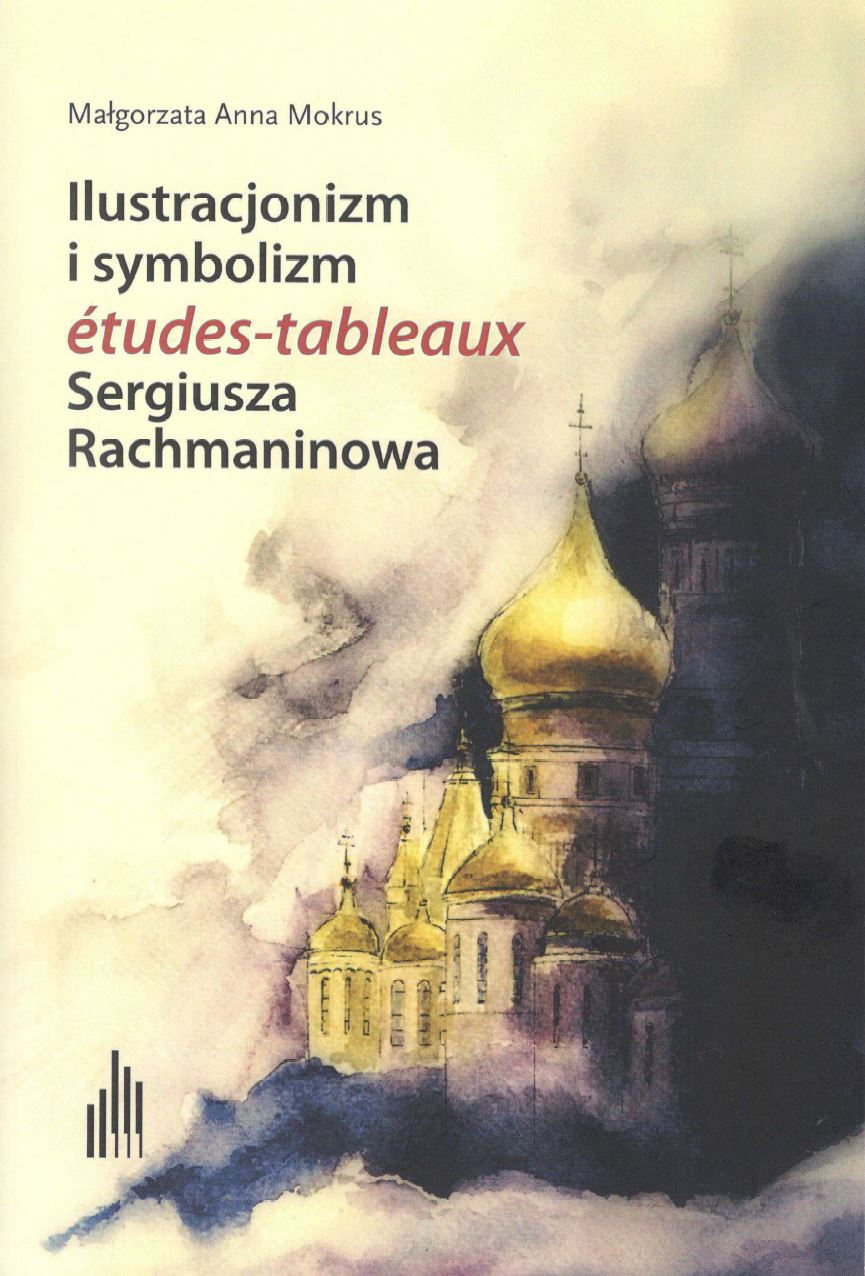
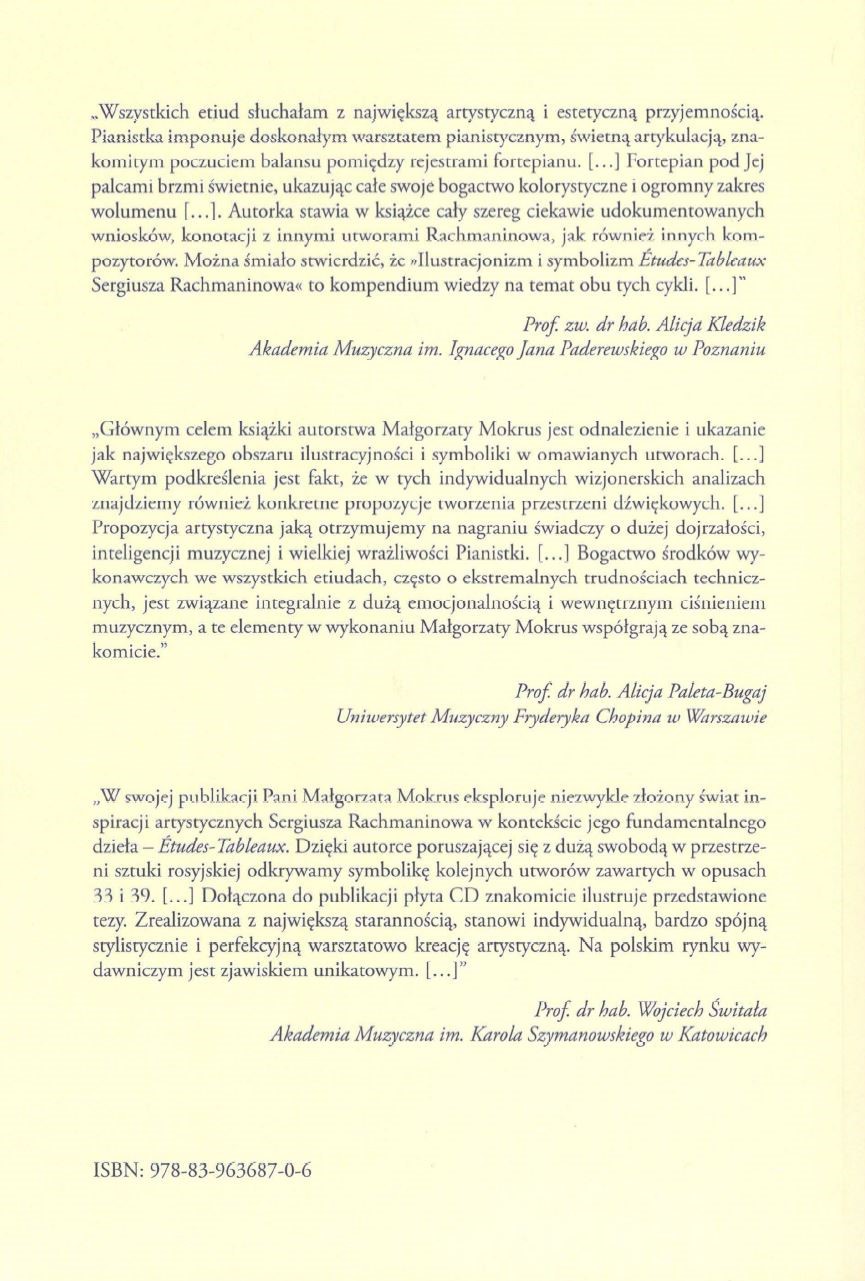
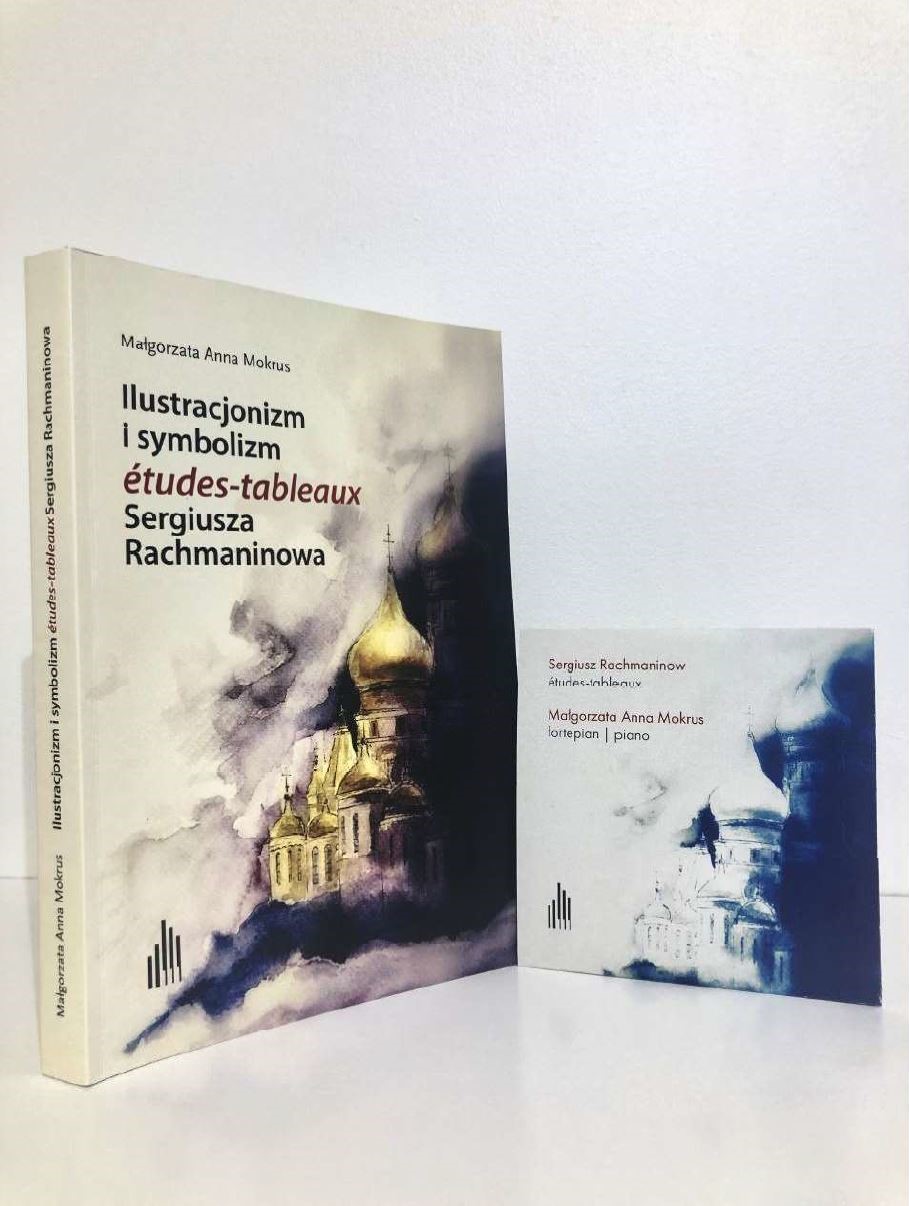
Illustrationism and Symbolism in Sergei Rachmaninoff’s Études-Tableaux
Publishing House of the Karol Szymanowski Academy of Music in Katowice
ISBN 978-83-963-687-0-6
About
About
The present volume seeks to encapsulate the reflections that accompany the search for answers to questions concerning the performer–interpreter’s engagement with a repertoire perceived intuitively and speaking directly to the deepest layers of emotion through its richness. It is with great pleasure that I extend an invitation to musicians, with a particular emphasis on pianists who possess a profound fascination for the oeuvre and musical style of Sergei Rachmaninoff, and to all readers who find themselves intrigued by the subject of the ‘correspondance des arts’, with a special focus on the passionate relationship that exists between music and painting. The central theme of this study is the illustrationism and symbolism of the Études-Tableaux, which draw inspiration from the medium of painting to enhance the impact of these extraordinary piano poems. On the one hand, they bear clear marks of sound painting; on the other hand, they simultaneously become carriers of hidden meanings, creating – a concept close to Rachmaninoff’s – an aesthetics of suggestion. The specific duality, deriving from a conflict of elemental forces, is suspended between Apollonian reason and Dionysian instinct. The interplay of the sensual and the ascetically transparent is expressed through the contrast of light and shadow, suggesting significant parallels with the composer’s creative personality. This duality also constitutes an inherent feature of Rachmaninoff’s piano art, which, marked by a certain degree of austerity, becomes a negative reflection of the richly emotional layer of his music. An unwavering conviction in the transformative potency of artistry, anchored in the tenets of conventionally defined aesthetics, aligns this oeuvre with the Symbolist paradigm. This alignment at its craft level emerged from academic principles that espouse the pinnacle of perfection in form as the paramount ideal. A densely woven network of symbols, intertwined with sentiments and resentments, reflects the creator’s life and evokes his existential reflections in the face of aesthetic transformations, forming the foundation of the impressive architecture and rhetorical structure of the Études-Tableaux. The phonographic recording of this work reflects a passion for discovering depths of sensitivity through immersing oneself in the space of one’s own emotions, resonating with the composer’s musical message. This artistic journey is both exhilarating and enriching, offering a profound artistic experience that is enhanced by the joy of engaging with works that echo the essence of art, conveying messages that transcend language yet are accessible to the soul.